

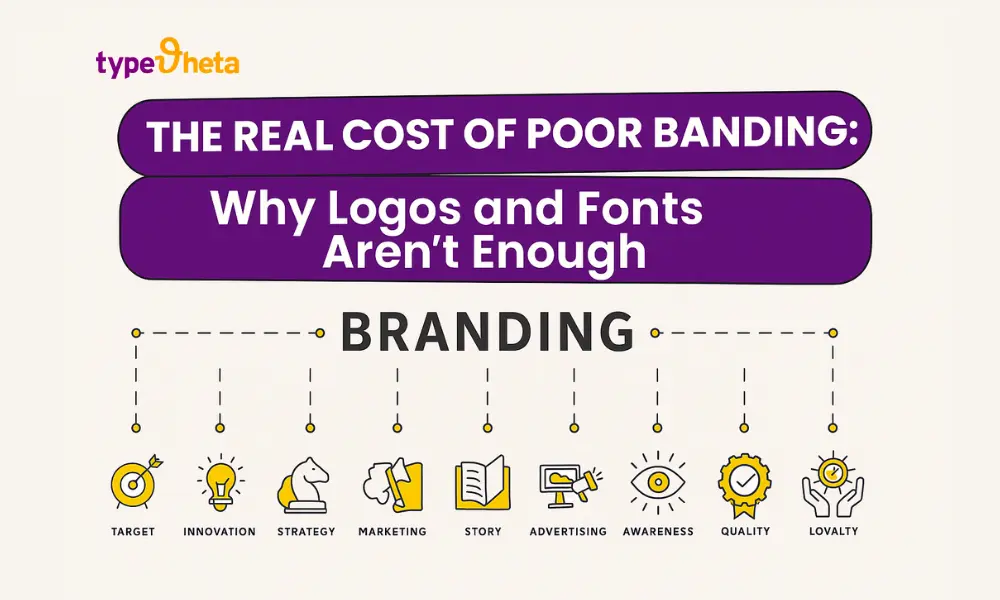
Introduction: Branding Is More Than How You Look
Across the UK, many businesses still treat branding as a purely visual exercise. A new logo, a modern font, and a fresh colour palette are often seen as the finishing line rather than the starting point. In reality, this narrow view leads to poor branding, which is one of the most common reasons businesses struggle to build trust, loyalty, or long-term visibility.
Branding is not what a business says it is. It is what customers experience at every touchpoint. In competitive markets such as London, Manchester, Birmingham, and Leeds, where customers are overwhelmed with choice, poor branding creates confusion instead of connection and makes it harder for businesses to stand out or be remembered.
Why Visual Identity Alone Fails to Build a Brand
Logos and fonts are tools, not meaning. They help recognition, but they do not communicate purpose, values, or reliability on their own. When branding is reduced to visual elements, the result is often a business that looks polished but feels empty.
Customers do not engage with brands because of typography choices alone. They engage because the brand feels relevant, consistent, and aligned with their expectations. When messaging, tone, and experience do not support the visuals, the brand feels fragmented.
This disconnect becomes visible when businesses present one personality on social media, another on their website, and a completely different one through customer service. Over time, this inconsistency erodes confidence and makes it harder for customers to remember, trust, or recommend the brand.
How Poor Branding Shows Up in Everyday Business
Poor branding rarely announces itself directly. Instead, it reveals itself through subtle but damaging signals. Website visitors leave quickly without taking action. Social media posts receive minimal engagement despite regular posting. Paid campaigns struggle to convert even when targeting and budgets are correct.
In many cases, the issue is not the product or service but the lack of a clear brand narrative. When customers cannot quickly understand who a business is for, what it stands for, or why it is different, they move on.
In dense UK markets, where competitors are often only a click away, this hesitation is enough to lose potential customers permanently.
Organic growth driven by relevance and trust – Explore our SEO services in London.
The Long-Term Cost of Weak Brand Foundations
The financial impact of poor branding is rarely immediate, which is why it is often overlooked. Over time, however, the cost compounds.
A brand that feels inconsistent or unclear struggles to build trust. Without trust, repeat business declines. Without repeat business, marketing spend increases. Businesses then rely more heavily on paid channels to generate the same results, pushing acquisition costs higher and profit margins lower.
Poor branding also limits organic growth. Search engines increasingly reward brands that demonstrate authority, clarity, and user satisfaction. When branding is weak, content lacks direction, engagement drops, and visibility becomes harder to sustain.
Branding as a Customer Experience, Not a Design Task
Strong branding is experienced rather than observed. It lives in how easily a website can be navigated, how clearly information is presented, and how confidently a brand communicates its value.
From first impression to post-purchase interaction, every detail reinforces the brand. This includes website structure, page layout, written content, tone of voice, and even response times. When these elements work together, branding feels effortless and trustworthy.
When they do not, customers sense friction. Even small inconsistencies can create doubt, particularly for UK consumers who are highly sensitive to professionalism and credibility.
Need a Shopify agency in London that delivers results?
typeTheta helps you generate organic leads and maximise conversions for your Shopify store.
The Role of Messaging in Brand Perception
While visual identity often receives the most attention, messaging plays a far greater role in shaping perception. The words a business uses determine whether it feels confident or uncertain, premium or generic, approachable or distant.
Clear messaging answers essential questions quickly: who the business serves, what problem it solves, and why it matters. Without this clarity, even well-designed brands struggle to connect.
Consistent tone across websites, blogs, emails, and social platforms reinforces familiarity. Over time, this familiarity builds recognition and trust, which are critical for long-term brand strength in the UK market.
Real-World Impact: When Branding Lacks Alignment
Many businesses with strong offerings fail to scale because their branding does not reflect their true value. This often happens when visual identity evolves, but messaging, content, and experience remain unchanged.
Customers notice these gaps. A modern website paired with outdated language, or confident marketing paired with poor follow-through, creates friction. The brand promise feels unreliable, even when the product itself is strong.
When branding aligns strategy, messaging, and experience, customers feel reassured. When it does not, growth stalls.
Boost your online visibility with AI SEO services in London that drive qualified organic leads to your business.
Why Content Is Central to Effective Branding
Content is where branding becomes tangible. Every paragraph on a website, every blog post, and every product description reinforces how a brand is perceived.
Well-crafted content provides clarity, builds authority, and demonstrates understanding of the audience. Poorly written or inconsistent content does the opposite, making brands feel careless or interchangeable.
For UK businesses, content must also reflect local language patterns, cultural expectations, and search intent. This localisation strengthens relevance and improves both engagement and visibility.
Building Stronger Brands Through Consistency
Consistency is the foundation of trust. When visuals, messaging, and experience align across channels, customers know what to expect. This predictability is what allows brands to grow without constantly reintroducing themselves.
Strong brands evolve, but they do so deliberately. Changes are guided by strategy rather than trends, ensuring continuity rather than confusion.
Businesses that invest time in defining and documenting their brand create a framework that supports marketing, content, and growth decisions long-term.
Strong branding drives growth. Let’s fix what poor branding is costing you. Book a consultation.
Conclusion: Branding Is an Ongoing Business Asset
Branding is not a one-off project or a design deliverable. It is an ongoing business asset that shapes how customers perceive, remember, and choose a brand.
The real cost of poor branding is not limited to aesthetics. It shows up in lost trust, higher marketing costs, and slower growth. In contrast, businesses that treat branding as a holistic system gain clarity, efficiency, and resilience.
For UK businesses navigating increasingly competitive digital landscapes, moving beyond logos and fonts is no longer optional. Strong branding is built through consistency, clarity, and meaningful customer experiences.
FAQs
1. What is considered poor branding?
Poor branding occurs when a business lacks consistency, clarity, or alignment across visuals, messaging, content, and customer experience.
2. Why isn’t a logo enough for branding?
A logo helps recognition, but branding is about perception. Without strategy, messaging, and experience, a logo alone cannot build trust or loyalty.
3. How does branding affect customer trust?
Consistent branding signals reliability. Inconsistent branding creates uncertainty, which reduces confidence and engagement.
4. Does branding impact SEO in the UK?
Yes. Strong branding improves engagement metrics, content clarity, and authority, all of which support better organic visibility.
5. How often should a brand be reviewed?
Brands should be reviewed regularly, especially when markets shift, offerings change, or customer behaviour evolves.